Paithani guide
Paithani Heritage: Origin, Motifs and How to Read One
Where Paithani comes from, what the pallu and motifs mean, and why prices range from ₹1,500 to ₹1,00,000. Paithan is the origin, Yeola the modern home of the craft.
- Sourced from Yeola
- Free shipping in India from ₹499
- Rated 4.9 on Google
- Cash on Delivery up to ₹3,000
Paithani is one of India's oldest continuously produced weaves. This page is about where it comes from and how to read one — if you are looking for our terms of service, that lives on the terms and conditions page.
Where Paithani begins
The weave takes its name from Paithan, a town on the Godavari in what is now Chhatrapati Sambhajinagar district, Maharashtra. Under the Satavahana dynasty, roughly two thousand years ago, Paithan sat on a trade route that carried Indian textiles as far as Rome. The silk and gold work of that period is the ancestor of what is still made today.
Yeola, in Nashik district, became the centre of production much later — weaving families settled there under Peshwa patronage in the eighteenth century, and it is where most Paithani is produced now. That is the distinction worth holding: Paithan is the origin, Yeola is the modern home of the craft. We are based in Yeola and buy there directly.
How to read a Paithani
Four features distinguish it from other silk sarees.
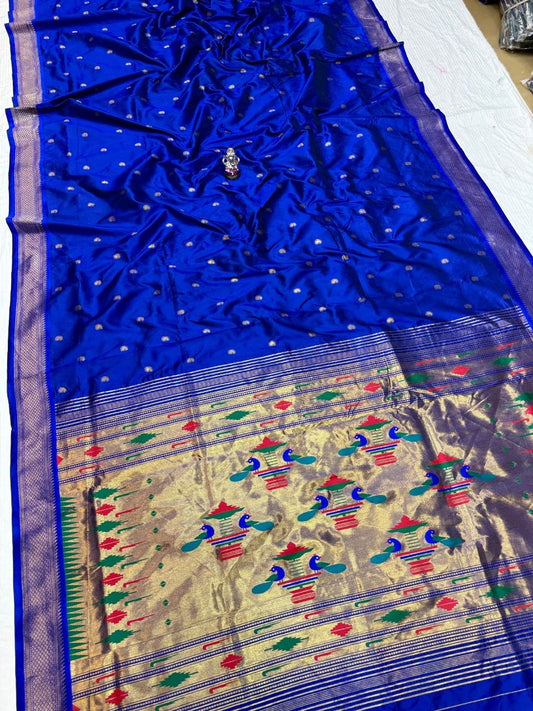
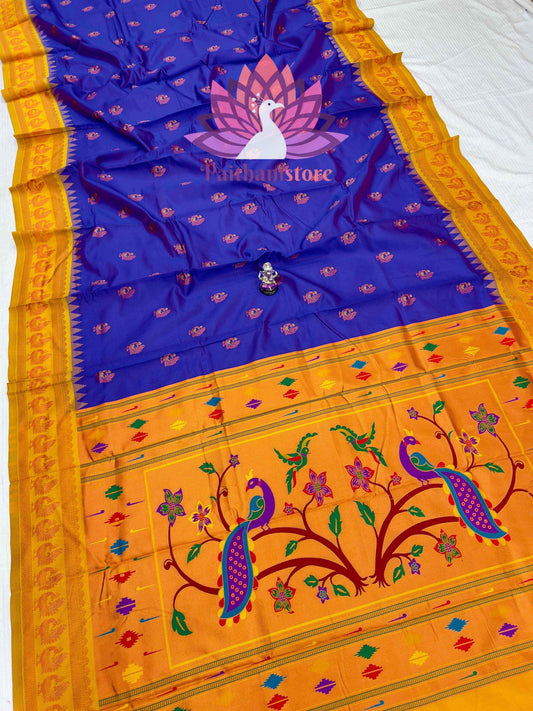
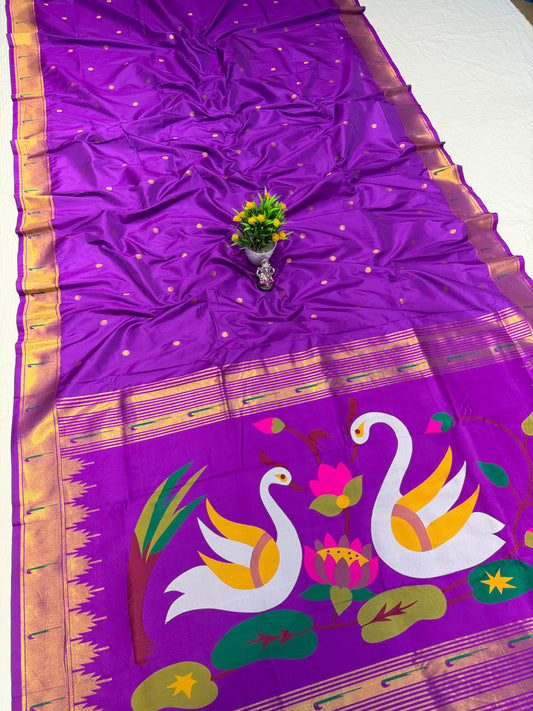
- The pallu — made with an interlocked weft rather than embroidered on. This is why a Paithani pallu looks the same from both sides.
- The motifs — peacock (mor), parrot (muniya), lotus, the coin border (narali), and the vine-like asawali. Each carries meaning; the peacock is the one most associated with bridal pieces.
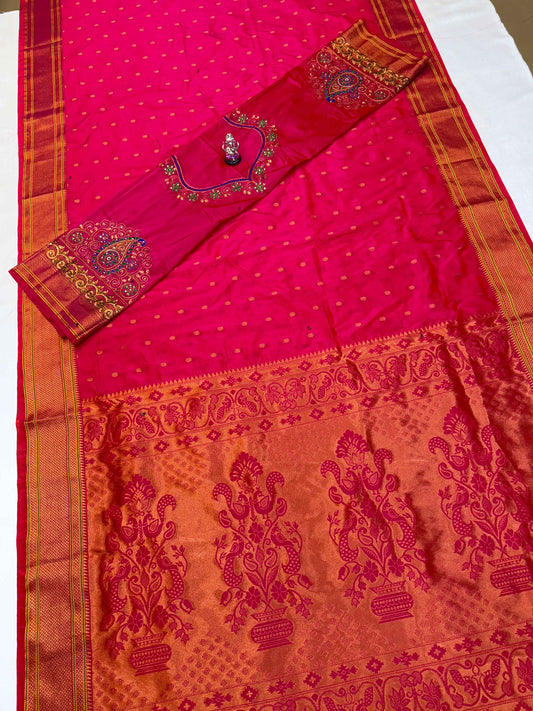
- The border — zari worked in a contrasting colour, often in the kadiyal technique where border and body are different colours.
- The colour play — two shades in warp and weft, so the saree shifts colour as it moves. Morpankhi, the peacock blue-green, is the classic example.
Why prices vary so much
A Paithani can cost ₹1,500 or ₹1,00,000, and both can be honestly sold. The difference is material and labour: how much real zari, whether the base is cotton, sico, semi-silk or pure silk, and how much motif work the pallu carries. A heavier pure-silk piece with a fully worked pallu genuinely takes far longer to produce.
We label material on every listing rather than calling everything silk. Sarees from ₹10,000 upward are pure silk; below that they are silk, semi-silk, sico or cotton.
Caring for one
Dry clean. Store folded in soft cotton or muslin, never plastic, away from damp and direct sunlight. Refold along a different line once a year so the same crease does not weaken. Kept properly, a Paithani outlasts the person who bought it — which is rather the point of one.
Browse Paithani sarees, pure silk Paithani or Narayan Peth, or read our guides.
Loved this month
Trending now
-
Traditional Semi Silk Yeola Paithani Saree with Shoulder Butta
Regular price Rs. 2,199.00M.R.P.:Unit price perRs. 3,500.00Sale price Rs. 2,199.00 37% off37% OFF -
Beautiful Vedikaa Soft Silk Paithani Sarees
Regular price Rs. 2,999.00M.R.P.:Unit price perRs. 4,000.00Sale price Rs. 2,999.00 25% off25% OFF -
Classic Semi-Silk self Yeola Double Pallu Paithani Saree
Regular price Rs. 2,299.00M.R.P.:Unit price perRs. 3,499.00Sale price Rs. 2,299.00 34% off34% OFF -
Royal Semi Silk Yeola Paithani Saree - Traditional
Regular price Rs. 5,699.00M.R.P.:Unit price perRs. 9,500.00Sale price Rs. 5,699.00 40% off40% OFF -
Vibrant Peacock Pallu Silk Paithani Saree - Yeola
Regular price Rs. 2,599.00M.R.P.:Unit price perRs. 3,500.00Sale price Rs. 2,599.00 25% off25% OFF -
Shloka Maharani Pallu Kalanjali Paithani Saree
Regular price Rs. 2,499.00M.R.P.:Unit price perRs. 3,199.00Sale price Rs. 2,499.00 21% off21% OFF -
Luxurious Ruhi Kadiyal Paithani Saree with Parrot Pallu and All-Over Meena Butti
Regular price Rs. 2,399.00M.R.P.:Unit price perRs. 4,000.00Sale price Rs. 2,399.00 40% off40% OFF -
Royal Paithani Nauvari Saree for Wedding - Traditional 9-Yard
Regular price Rs. 3,299.00M.R.P.:Unit price perRs. 4,000.00Sale price Rs. 3,299.00 17% off17% OFF -
Paithani Potli Bag - Elegant Traditional Design
Regular price Rs. 899.00M.R.P.:Unit price perRs. 1,500.00Sale price Rs. 899.00 40% off40% OFF -
Indradhanush Kadiyal Paithani Saree
Regular price Rs. 2,499.00M.R.P.:Unit price perRs. 3,499.00Sale price Rs. 2,499.00 28% off28% OFF -
Kajal Designer Kalanjali Paithani Saree
Regular price Rs. 3,999.00M.R.P.:Unit price perRs. 5,499.00Sale price Rs. 3,999.00 27% off27% OFF -
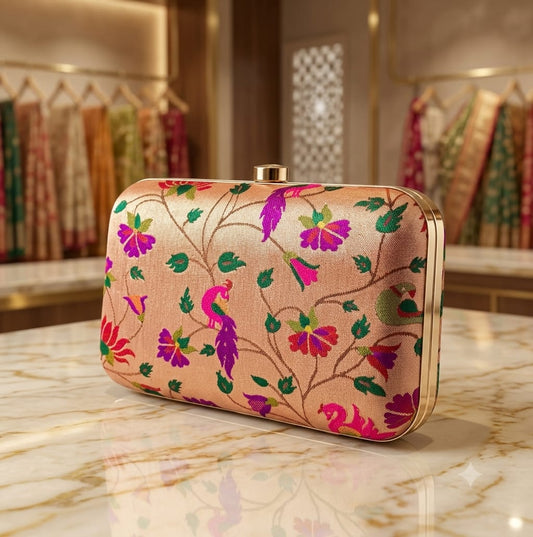
Allover Paithani Silk Clutch Purse with Golden Chain
Regular price Rs. 1,399.00M.R.P.:Unit price perRs. 3,000.00Sale price Rs. 1,399.00 53% off53% OFF -
Elegant Traditional Nauvari Paithani Saree with Meena Butti - Soft Tana Silk 9 Yard Saree
Regular price Rs. 3,099.00M.R.P.:Unit price perRs. 5,000.00Sale price Rs. 3,099.00 38% off38% OFF -
Beautiful pihu Muniya Border Paithani Saree with Fancy Pallu
Regular price Rs. 2,299.00M.R.P.:Unit price perRs. 2,999.00Sale price Rs. 2,299.00 23% off23% OFF -
Off-White Paithani Lehenga Choli Set with Red Dupatta & Potli
Regular price Rs. 5,299.00M.R.P.:Unit price perRs. 7,000.00Sale price Rs. 5,299.00 24% off24% OFF -
Double Muniya Paithani Silk Saree
Regular price Rs. 2,999.00M.R.P.:Unit price perRs. 5,000.00Sale price Rs. 2,999.00 40% off40% OFF -

 37% OFF
Chandrakor Paithani Saree
Regular price Rs. 2,499.00M.R.P.:Unit price perRs. 4,000.00Sale price Rs. 2,499.00 37% off37% OFF -
Premium Fabric with Peacock Embroidery Blouse Piece
Regular price Rs. 1,599.00M.R.P.:Unit price perRs. 3,000.00Sale price Rs. 1,599.00 46% off46% OFF -
 13% OFF
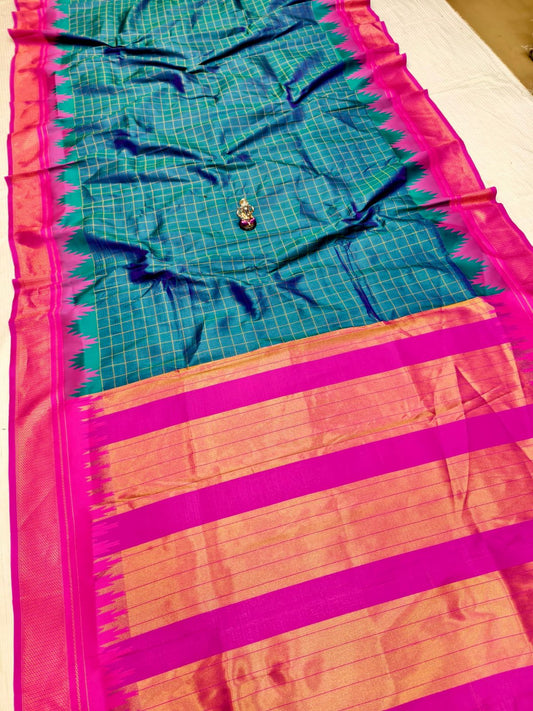
Beautiful Checks Irkal Paithani
Regular price Rs. 2,599.00M.R.P.:Unit price perRs. 3,000.00Sale price Rs. 2,599.00 13% off13% OFF -
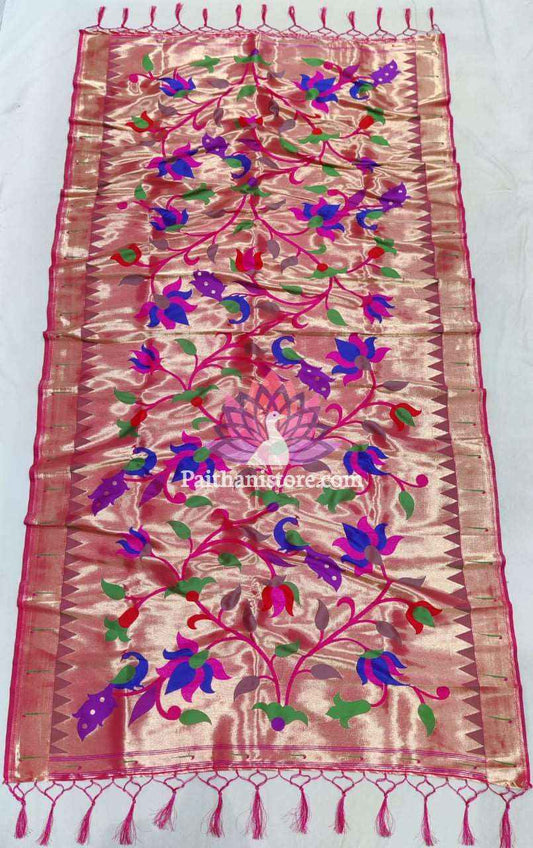
Paithani Dupatta Pink Allover Zari
Regular price Rs. 2,299.00M.R.P.:Unit price perRs. 3,500.00Sale price Rs. 2,299.00 34% off34% OFF -
Readymade 9 Yard Nauvari Paithani Saree - Pre-Draped Traditional
Regular price Rs. 3,299.00M.R.P.:Unit price perRs. 4,500.00Sale price Rs. 3,299.00 26% off26% OFF -
Dhotis - Buy Traditional White Men's Dhoti
Regular price Rs. 1,299.00M.R.P.:Unit price perRs. 1,600.00Sale price Rs. 1,299.00 18% off18% OFF -
Traditional Paithani Blouse Piece
Regular price Rs. 1,699.00M.R.P.:Unit price perRs. 3,000.00Sale price Rs. 1,699.00 43% off43% OFF